
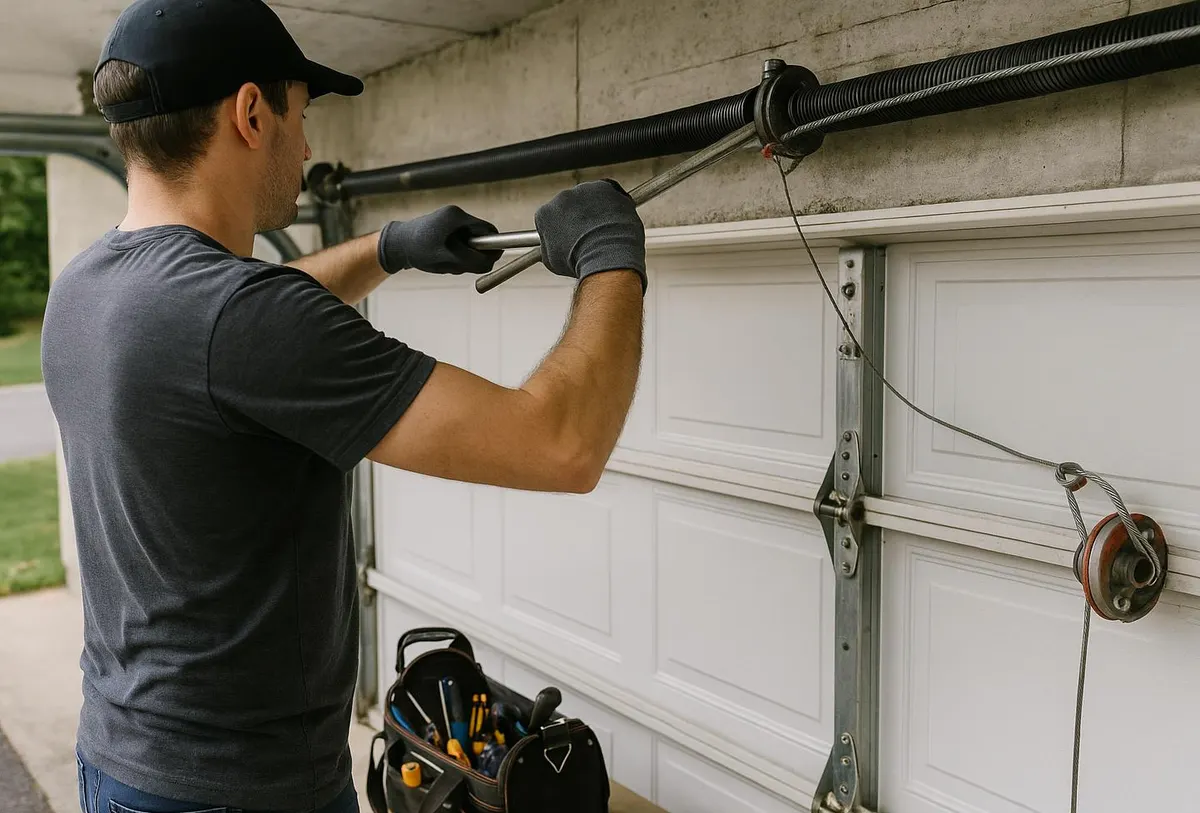
What a Technician Sees on This Call
The service call usually starts the same way: someone hits the opener button on a cold, damp morning and the door either doesn't move at all, or it groans halfway up and stalls. Sometimes there's a loud crack or pop as the door finally breaks loose from the slab. Other times the opener motor runs fine, but the door itself crawls along the track like it's dragging something. After a hard freeze or an ice storm moving through Pierce County, this is one of the most common calls we get.
None of this means the whole system is failing. Cold and moisture just expose weak points that were already there—worn seals, thickened grease, springs that were already a little tired. Here's the order a technician actually works through to find out which one is yours.
Symptoms Worth Noting Before You Call
- Door won't budge at all, as if it's glued to the garage floor
- A loud pop or crack right before the door releases
- Opener motor runs, but the door doesn't move, or moves then stops
- Door moves, but slowly and unevenly, with grinding or squealing
- Door reverses partway up and won't complete the cycle
Write down which of these matches your door — it narrows the diagnosis before anyone even opens the panel.
The Causes, Checked in Order
1. Ice Welding the Bottom Seal to the Slab
This is the first thing checked because it's the most visible and the easiest to misdiagnose as a motor problem. After a freeze, condensation under the door's rubber seal can refreeze and literally bond the seal to the concrete. Forcing the opener in this state strains the motor, the drive gear, and sometimes the top panel.
The fix: never pry the door up with a crowbar. A technician (or you, carefully) pours warm — not boiling — water along the seal line to break the bond, then runs the door manually to confirm it moves freely before using the opener again.
2. Stiff or Cracked Weatherstripping
Rubber gets brittle in cold temperatures, and after months of rain cycling through wet-dry-wet, bottom seals and side weatherstripping on older doors are often already cracked or starting to rot. Brittle rubber doesn't seal well and is more prone to freezing to the slab in the first place.
The fix: replace the bottom astragal seal and side weatherstripping. It's a low-cost fix that also cuts down on the draft and moisture getting into the garage.
3. Spring Tension Shifting With the Cold
Metal contracts slightly in cold weather, and torsion springs that were already near the end of their lifespan can lose enough tension that the door suddenly feels much heavier. If you disconnect the opener and lift the door by hand and it feels like dead weight instead of lifting smoothly, this is likely the culprit.
The fix: spring tension adjustment, or full replacement if the spring is worn, rusted, or near its cycle-life limit. This is not a DIY repair — torsion springs are under heavy tension and can cause serious injury if handled without the right tools.
4. Thickened Lubricant and Rust on Hardware
Standard grease and oil thicken in cold temperatures, which stiffens hinges, rollers, and the torsion bar. Combine that with months of damp air and it's common to find surface rust on tracks and hardware, especially on doors near Fort Steilacoom and other spots where moss and moisture collect on exterior surfaces generally.
The fix: clean off old grease and rust buildup, then apply a silicone or lithium-based garage door lubricant — not WD-40, which is a solvent and strips lubrication rather than adding it.
5. Opener Force and Limit Settings
If the door has gotten heavier from spring fatigue or drag from stiff rollers, the opener's force settings — calibrated for normal conditions — can cause it to stall or reverse partway through the cycle, misreading the extra resistance as an obstruction.
The fix: adjust the force and limit settings, and check the drive belt or chain for proper tension. If this keeps happening after adjustment, it usually points back to the spring or rollers, not the opener itself.
6. Worn or Corroded Rollers and Tracks
Nylon rollers can crack in sustained cold, and steel rollers develop rust pitting in our wet climate that makes them bind instead of rolling smoothly. A technician checks each roller by hand and inspects the tracks for corrosion or debris buildup.
The fix: clean the tracks and replace any rollers that are cracked, flat-spotted, or rusted solid.
When to Call Lakewood Garage Door Service
If your door is frozen solid, reversing on its own, or suddenly feels much heavier than usual, stop using the opener and call rather than forcing it — that's exactly the kind of situation that turns a simple fix into a broken panel or a snapped cable. Our Emergency Garage Door Service handles the stuck-shut, can't-get-the-car-out calls, and our Spring Replacement service covers the heavy, no-longer-balanced door once the real cause is identified. If your door has been sluggish for a few weeks but still technically works, a Preventive Maintenance visit before the next cold snap catches worn seals, dry hardware, and tired springs before they leave you stuck on a December morning.
If your garage door is fighting you this winter, call Lakewood Garage Door Service — we'll find the actual cause and get it moving right, not just patched for now.